Podcast
November 11, 2025
Unreasonable Hospitality in Healthcare, with Josh Ginsberg
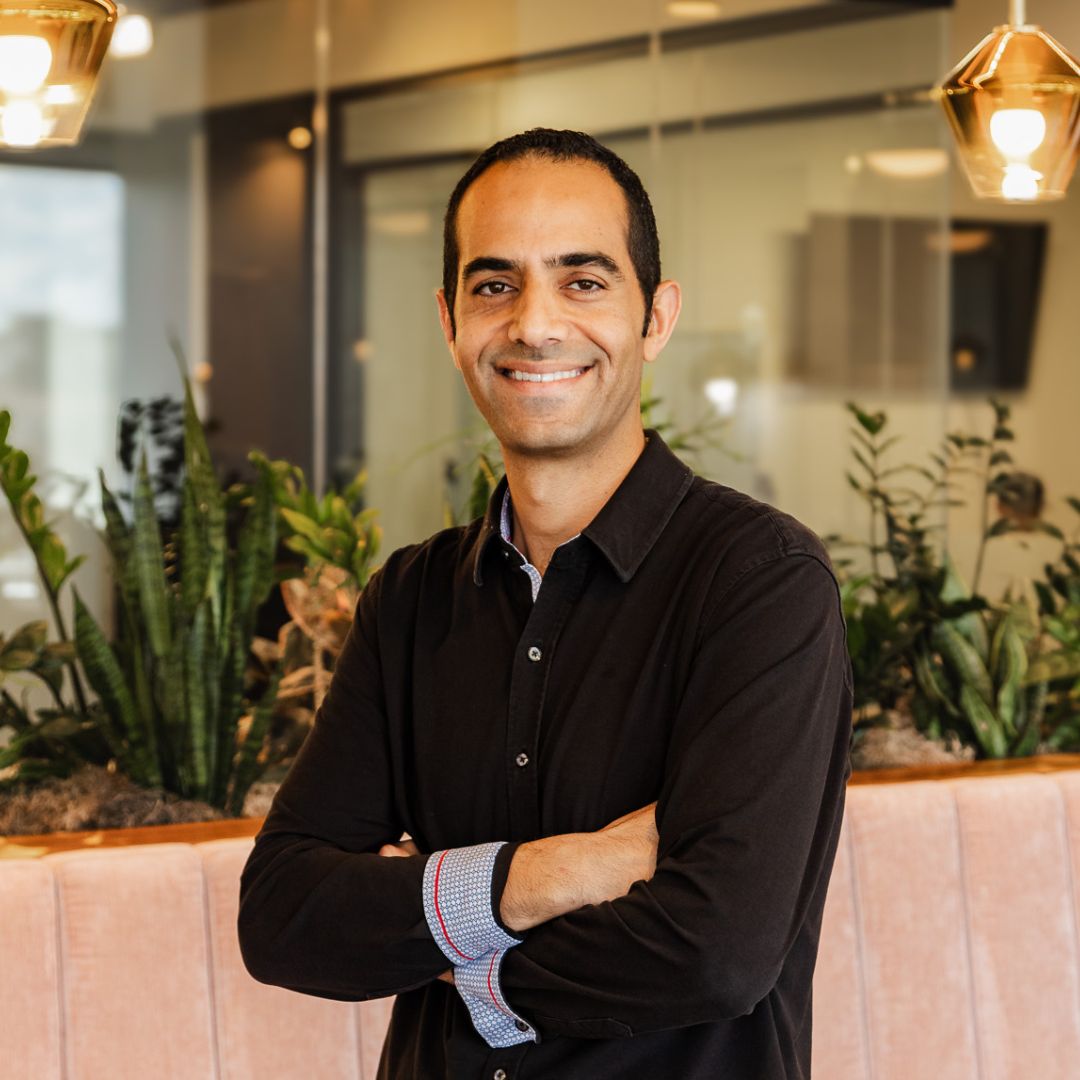
In this episode, Josh Ginsberg shares his unexpected journey into healthcare, detailing his journey to becoming the Executive Director of The Heart House, one of the largest cardiology groups in New Jersey. He emphasizes the importance of building relationships within the healthcare system, motivating teams, and providing exceptional patient experiences. Josh discusses the unique structure of Heart House, the challenges faced in the healthcare industry, and his aspirations for innovation and personal wellness.





Kaled Alahanfi (00:03)
Welcome to the innovators podcast. I'm your host Kaled Alhanafi and I'm so excited to have on the show today, Josh Ginsberg, one of our partners and executive director of The Heart House. Welcome, Josh.
Josh Ginsberg (00:16)
Thank you, Kaled It's nice to be here.
Kaled Alahanfi (00:19)
Of course, thanks for being here. I'm so excited to talk to you on many things today. We met, I think, six months ago or so, and we're now partners, we're working together. But I'd love to learn a little bit more about your journey into healthcare, how you got to where you are today. You've been doing this for more than 20 years now with the Heart House team. So tell us what got you into healthcare, what got you to the Heart House, and let's take it from there.
Josh Ginsberg (00:48)
Sure. Growing up, I didn't have this grandiose idea of being a healthcare administrator. It was not the furthest thing from my mind, but it certainly wasn't on my mind as I progressed through school and got into college. When I was an undergrad at University of Pittsburgh, I really did not know what I wanted to do. And a bunch of my friends and fraternity brothers were taking these legal studies classes because the professors were all adjunct judges and lawyers who spent a lot of the time telling stories about their day, which was interesting, and they were at night. So I didn't have to wake up early. And so I was like, great, I'm to take those classes. And I I ended up with a no intent to go to law school, but I graduated in four years with a bachelor in arts in legal studies. And, had, again, 0.0 aspirations of going into law school. So now here I am, 1994, moved home, and I now have a degree in legal studies with no direction or wherewithal on what I'm gonna do with my life. And I remember my mother, I remember it was the summertime, and my mother, I was just sitting around, I had odd jobs. I must have worked 50 different types of odd jobs, temp jobs.
I was, during the holiday season, I sat on the sidecar of the UPS helping deliver packages. I worked in the freezer at Walmart, stocking freezer stuff. I was a cashier at 7-Eleven. I was a temp agency at an HVAC place where I was a dispatcher. And so my mother said, hey, one of her best friend's son was in the,
Master's program for Health Administration at Temple University and said hey Teddy's in this program. Why don't you do that? And I was like, okay, right so I started to study for my GMATS while I was doing these temp jobs and lo and behold I ended up one of my very very close friends that I grew up with his father was a Marketing professor in the healthcare administration program at Temple
And so that was the only program in Temple's master's program that you needed to have an interview in order to get in. So I called my buddy Mark and I said, hey, your dad's an adjunct professor. Can you at least help me get an interview? And so he helped me get an interview and I was able to get into that program. And that was 1995. And I ended up getting into the MBA program for health administration at Temple.
Kaled Alahanfi (03:39)
95.
Josh Ginsberg (03:45)
And that started my career in health administration, again, with no previous aspirations, just sort of fell into it. And, you know, thankfully I did. But that's, you know, and then I ended up spending two years full-time at Temple. I learned that I could take three additional classes to get another master's degree in healthcare financial management so I could graduate one term later with a dual MBA, MS. degree, Health Administration, Healthcare, Furniture Management, and I had to write a paper at the end, which I wrote on capitation, which was hot at that time. And ended up graduating. But before I did, before I graduated, my sister-in-law, so this all comes down to like who you know, not what you know. My sister-in-law was a nurse in the allergy department at Children's Hospital and told me that the business manager
Kaled Alahanfi (04:36)
Right.
Josh Ginsberg (04:42)
Her department was leaving, did she want me to give my resume to the director? And I said, yeah, I wasn't done my MBA yet. So I said, sure, yeah, that'd be fine. Yeah. I ended up getting an interview, got the job. And so I finished my master's degree part-time while I worked full-time at CHOP. And that was, I remember before I graduated. Yeah, I started, I remember September 2nd, 1997 was my first day working at CHOP. I remember vividly.
Kaled Alahanfi (05:00)
So before you graduated, you had this job. Amazing.
Josh Ginsberg (05:12)
I had a cubicle. My job title was staff accountant, and I'm the farthest thing from an accountant, but I was technically the business manager for a group of the allergy department, rheumatology, pulmonary, infectious diseases, and immunology. I was the business manager. But I remember it vividly the first day like it was yesterday. Now I'm year 29 of my health care career, and I remember that day vividly.
Kaled Alahanfi (05:17)
Okay.
Josh Ginsberg (05:40)
That my entree into healthcare was a stumble rather than an eloquent walk.
Kaled Alahanfi (05:47)
That's incredible. That's incredible. These jobs that you had, 7-Eleven, Walmart, all these things, I bet prepared you for the chaos that is the world of healthcare, right? All the administrative stuff that you have to deal with and all the different stakeholders. With that job, the first one with the hospital, the children's hospital, when you got in there what did you find in terms of like, okay, was it the same as what you expected? You had this degree, you were going through it. When you got there, did you immediately fall in love with this discipline or were you kind of still looking at it and saying, you know what, let's explore this further and see what that looks like.
Josh Ginsberg (06:33)
Yeah, it wasn't love at first sight, I can tell you that much. It was just something, I never even thought of myself as to be this super disciplined, kinda like hardworking guy. I never saw myself like that early in my career. And I think when I started there, I just began and became that person. The person who understood how to develop a rapport with the physicians I worked with because I worked on the physician plan side of things rather than on the hospital side of things. So, you know, when you're in a hospital, there's the hospital side of the business and the physician side of the business. And I was aligned on the physician practice plan side. So I worked very closely with physicians, which are partners in the hospital. But I learned very early how to develop that rapport, develop the trust. Develop even personal relationships, you know, beyond just being a business partner with the doctors I worked for. And I just felt comfortable. It wasn't something that I knew, you know, I don't think your master's program prepares you necessarily for how to do a job as an administrator. You know, I always say the biggest thing I learned in grad school is how to use Excel. But for some reason, sometimes, some occupations require advanced degrees in order to open up that door for you. And in my case, that's, think, what happened. Not in every case, but I think in my case it was. And I just, you know, I hit the ground running with just understanding, develop trust early with the physicians, do whatever they needed me to do. And I still do that to this day, 30 years later. So I remember I was doing things that like IT people typically should do, but I could figure out how to do it just to get that computer up and running for that doctor. And guess what? That doctor then remembered that I did that and now there was a trust bill or the doctor needed me to do something ridiculously stupid that somebody said, that's not my job. And that's not my never said, that's that, you I never say that's not my job still to this day I never say that. always joke with the employees that we have this line at the bottom of their job descriptions that says all other duties as assigned. So that when anybody ever says that's not my job, as a joking, I always say, look at the bottom of your job description, all other duties as assigned. And that's just been, that's been my mentality. It wasn't written. It wasn't codified. It's just been my mentality since I started a job. It's I'll do whatever I need to do in order to make.
Kaled Alahanfi (09:07)
You agree to it?
Josh Ginsberg (09:19)
the people that I'm supporting job easier. My job is to make their job easier. That was back at shop and that's at the hard house, the same thing. That's just my mentality.
Kaled Alahanfi (09:29)
That's incredible. I love that. How did you jump from the Children's Hospital to Heart House? What was that story like? It sounds like relationship building, did a wonderful job there, no task is beneath you. Of course, everyone's going to love that. How did that opportunity come up to move on to one, cardiology, and then two, specifically the Heart House?
Josh Ginsberg (09:55)
So I was at Children's Hospital for nine years and developed a good rapport also with the administrative lead of the physician practice plan that I worked for, who I'm still close to and talk to. He retired recently, but I still talk to him to this day. We text and stuff. And so I got to a point where I recognized that Children's Hospital
Kaled Alahanfi (10:12)
Amazing.
Josh Ginsberg (10:21)
which is probably one of the greatest institutions in the world of Philadelphia, Children's Hospital of Philadelphia, basically had a department for everything. So, you know, they had the budget department, they had the facilities department, they have risk management, they have legal. And for me, I was ready to get more exposure. Like I felt like I moved from what they call business manager and I got promoted and I became an administrative director and that was of one division. was the Administrative Director of Neurology. Again, there's no relationship to the clinical disciplines that I was running. It was more on the business side. So a job opened up. They said, do you want it? I said, great, I'd love to do this. And I started to become the Administrative Director Neurology. Then, I don't know if it was six months later, then a new division opened up and they added that to me. So then I was the Administrative Director of Neurology and Endocrinology. Again, there's zero relationship between my awareness of what endocrinology was, or there's no relationship between neurology and endocrinology. was more on an organizational chart. Hey, we need an administrator to handle this division. Just let's link it up with Josh. He only has neurology. Great. He has two divisions now. And then I got to a point where I felt confident. Yeah, just expanding the scope of my skill set. I felt like I've reached a
Kaled Alahanfi (11:39)
So just expanding the scope.
Josh Ginsberg (11:48)
plateau of what I could do. And so I then started to, you know, I started to reach out to these departments and say, hey, can I spend a couple hours with you? I need to learn a little bit more about this. And they were like, yeah. So I went to the risk management department. I went to the budget department. And I just spent a couple of hours with these people. But I realized that for me to get more access and more exposure to more business stuff, I'm gonna have to probably leave.
And I specifically sought out private practice because I said that private practice is an area where I'm going to have exposure to everything. And so I started to like, talked to my, to my mentor, the gentleman I spoke about, Mike Corbo, who's recently retired. And I told him what my interests were. And again, another, another who you know, story. He's a, he was a CPA and one of his CPA classmates had recently at this is again, this is going back to 2005 at the time, had just opened up a recruiting firm. And it just so happens that the Heart House had actually contracted with her to find who, what I, what my role is now. The Heart House was looking to replace the person who was my predecessor. And so Mike said, hey, is this of interest to you? They're looking for somebody. said, yeah, I'll do that. I'll take a look. And so, you know, I did a phone interview with the then managing partner who ended up hiring me, who I socialized with outside of work today. And then probably another year went by, so nothing really happened because they weren't prepared to let my predecessor go at the time. But they had, I think they had mentally were ready, but they hadn't really done it yet.
Kaled Alahanfi (13:33)
I see.
Josh Ginsberg (13:38)
And then I just kept in contact with them and then they eventually were letting him go. And I remember I came into, they brought me into interview and I later found out it was between me and one other person. Anyway, the interview is in this big boardroom in Cherry Hill, New Jersey, big boardroom. There are seven doctors in myself. And at the time I was not, I hadn't had the confidence level that I have now, feeling comfortable having dialysis.
And when I get nervous, know, some people's, face gets red and blotchy. Some people like sweat and I'm one of those people. I sweat when I get very nervous. So here I am, I'm in a suit. I'm around a table with seven doctors. And this is a time, okay, so I remember this so funny. This is a time where cell phones were like coming into play. So iPhones were that big at Blackberry's and there was something called a Treo.
Kaled Alahanfi (14:33)
Right.
Josh Ginsberg (14:37)
It was like Treo made by Palm Pilot. I remember that all the time, 2005, yeah, 2005. I remember vividly they all had them sitting in front of them. And I had like a flip phone at the time. So I was like mesmerized. was looking at, I remember looking at the tray and I was like, it was so cool looking at that little device. Anyway, they just started asking me questions, normal interview questions. They weren't like, I wasn't a deposition. It was a normal, but seven doctors.
Kaled Alahanfi (14:40)
Is this what, 2004, 2005? What timeline are we? 2005, yep.
Right,
Josh Ginsberg (15:06)
I was
Kaled Alahanfi (15:06)
right.
Josh Ginsberg (15:07)
sweating profusely. mean, to this day, the doctors who were still in the practice, who were interviewing me, they still make fun of me for sweating so bad. I mean, it's a running joke. I was sweating horribly. And the fact that they still hire me is hilarious. anyway, it was between me and this other person. The other person was more on the accounting side. And at the time, they were having major issues with their managers.
Kaled Alahanfi (15:30)
Okay.
Josh Ginsberg (15:36)
And so they needed a different skill set than accounting because they had morale issues and stuff. Not that I had this like huge background in improving employee morale, but I think that because the other person was more on that finance accounting side, generally the knock on those people is that their personalities are different. Yeah, they're not as much a people person.
Kaled Alahanfi (15:42)
right.
Right.
Not people people. Yeah. Yeah.
Josh Ginsberg (16:04)
Anyway, anyway, so they offered me the job and I started April 16th, 2006. And it's, you know, it's been, I've gone through now. I'm on my third head doctor. And we have a great track record here. My senior managers, the ones who were here during the timeframe that were here before, one just retired in December. For here for 32 years. My billing manager's been here 30 years and my operations manager's been here about 25 years. So I'm here 20 years this year and I'm the junior of our senior managers, which again, says a lot about the practice and the way that the practice runs.
Kaled Alahanfi (16:44)
That's incredible. It does say a lot about the practice and we've seen the practice, talked to some of the folks and it's just amazing. The fact that all these folks are able to stay in for so long and be motivated to do this work, even though some of the work is hard. It's repetitive when you're thinking about the administrative side of things, right?
How do you keep them motivated, Josh? mean, you clearly have great experience coming out of that children's hospital. You've built relationships with the doctors. We'll touch on the relationships with the doctors. That's a whole other topic. But how do you keep the team motivated, especially when what you're doing on a day-to-day basis is so challenging, right? I mean, you are dealing with patient calls. You are looking at faxes, referrals, all these administrative things that are going on in the practice, the billing side. Insurance doesn't want to pay. The patients want faster interactions and better care. How do you keep it all together?
Josh Ginsberg (17:52)
Yeah, it's not easy. I think there's a little bit of the fact that I am lucky that I have a good team who's somewhat self-motivated. But if I expand beyond just the senior manager team, which again is a small little team, there's only four of us in the senior management team, beyond that to the next level of managers, you know, I don't have this magic bullet. Just, I'm very open with them. I communicate openly with them. I'm very accessible. People feel comfortable coming to me to talk about issues they're having and I listen. That's a very, very important thing that I've learned over the years is listening. In the movie, White Man Can't Jump, I remember Woody Harrelson having an argument with Leslie Snipes about, you hear me, you're just not listening to me. And so, you there's a difference between hearing somebody and listening. And so, you know, I do a lot of listening. And I think people like that. They feel comfortable being able to talk. And a lot of people are already thinking about the next thing they're going to say, and they're not even listening to what the person's saying. And I just have always had this open door policy with anybody in the practice. doesn't matter what your level is.
And I've always treated myself as nothing is beneath me. So I think when staff see me doing things that they would maybe not characterize as something that the quote unquote executive director would be doing, I think that lends itself a little bit to them maybe wanting to also do it, say, listen, Josh is gonna do this, I can do it. And believe me.
There are things that I do that you would probably shake your head and you couldn't believe that I'm doing them. But my mentality is, listen, just because I have this title doesn't mean anything. I'm just a regular person. We're side by side. I'm colleagues with my medical records person. We're colleagues. I don't wanna be seen as this, there's Josh, the executive director. I understand it comes with the territory of being in this role.
Kaled Alahanfi (19:54)
I love it.
Josh Ginsberg (20:12)
That when I go to an office, another office, and that's not mine, that's maybe how I'm perceived because of the role I'm in. But I don't walk around with that perception of myself. I walk around like, look, I'm shoulder to shoulder, side by side. You need me to do something? I'll help you do anything. Anything. You know, I get involved to, you know, it sounds crazy, but like at my office that I'm in now, which houses our access center, our billing staff.
I'm the one changes the light bulbs, right? So we used to have this old guy, a retired guy, Bill, who used to come and do odd jobs for us. And he got too old, so he really couldn't do it. I just started, I didn't change light bulbs, but I just started to change the light bulbs. And now it's like, anytime there's a light bulb out, they're like, there's a light bulb out over Colleen's desk, can you get to it? And I just do it.
And again, some people might shake their head like, is an executive director doing that? And I don't even think like that. And again, I think that people see that and they acknowledge that and recognize that. And I think that makes them say, if Josh is going to do that in this role, yeah, I'm willing to help out where needed. I'm willing to maybe go the extra mile. So lead by example is what I try to do.
Kaled Alahanfi (21:35)
I love it.
I love it because one, it's so powerful. Two, there's a misconception about healthcare where you go into these clinics and sometimes the experience is not so great. So as a patient, what you're exposed to is you see...
Is this organized in a certain way, not organized in a certain way? I look at the tech companies and where I've worked in tech and there's a sense of, know, one of the values that is so common across tech companies is this ownership mindset, right? And when I talk to executives and CEOs of healthcare, I see that, right? And you're a great example of this, right? You're willing to go out and change the light bulb, clean something, show the team that you're there. So it's not what people think of it when they think of healthcare leaders, they're in their ivory towers. You you're on the ground with the team doing the work, which is really empowering. So I bet they see that and appreciate that. Maybe tell us a little bit about how the organization is structured, Josh. So to somebody who doesn't know the ins and outs of healthcare practice, whether it's private practice, PE practice, what does the level of organization, how does the organization look like on the inside?
Josh Ginsberg (22:49)
Yeah, it's funny when you mention ivory tower because to that point I joke with my team when I talk about like if we're gonna, you we need to go and we need to execute something, you know, in a local office, we need to do something different or we need to communicate with the patients a different way. And I always joke, say, I know it's easy for me to say sitting here in my ivory tower, you know, because you guys are on the ground level having to do that, but you know, we're gonna need to do that. So I use the all the time in a joke in a joking way saying you know I'm not the one who's doing it but I understand the importance and you know we need to we need to do that but you know our practice is is set up with you know we have six offices and each office has a local office manager which is somebody that has worked probably at the front desk and ended up getting promoted up the ranks which is something that we try to do being a small practice, relatively speaking, compared to like a large hospital system. There's not as much opportunity all the time for staff to move into higher levels, but anytime there is, we try and take advantage of the staff that are interested and are showing the need for growth and we try to move them up. So each of our offices has a local office manager. And then we also have a large group of clinical staff too, and they're, you know, separated out into different groups, medical assistants, have nurses, we have different types of technologists. We do stress testing, so we have nuclear stress technologists. We do ultrasounds, so we have echocardiogram ultrasound technologists. We do vascular ultrasounds, which is of the legs. So we have those technologists. And we all basically work in conjunction with each other, not always perfectly, but we work in conjunction with each other for the sole purpose of providing a service to the patients. And I failed to neglect, we have doctors, right? Obviously we have doctors that work in every office. And so we all have a role and you know, our days, our patients are coming in to see us. Our offices, we can see up to a hundred patients in a day and that's five days a week. Our offices, our first patients arrive at 7 a.m. Eastern time for stress testing and our office is usually a running, know, closing down, shutting down shortly after 5 p.m. Eastern time. So we run, we try and run efficiently. We understand that patients have choices in terms of where they want to go. We try to make sure that we deliver a service that honors that. When patients schedule appointments, I ask that our people scheduling them thank patients for choosing the hard house. That's something I ask every time that we close a scheduling call, thank you for choosing the hard outs because they can go anywhere. And so the days of our offices are hectic with so many patients coming through all with different types of clinical issues, all with different types of insurance related issues. We have different levels of staffing. Those different levels of staffing in and of themselves have different levels of people who understand things. have people who've been here 20 years, people whose their first day.
We have new technology that we bring in, which sometimes the patients don't like, which is the kiosk at the front desk to help them check in, which helps us. So it's navigating the challenges between the patients who understand and like that technology and the patients who come in and hate the technology. It really is, every day is a new day. It's a different day. You never really get the same thing. It's like the Forest Gump, life's like a box of chocolates. You never know what you're gonna get. Every day of our office is like a box of chocolates.
Kaled Alahanfi (26:39)
Bless.
That's my brother's favorite quote, by the way, the Forrest Gump one. You mentioned a couple of things about your team and how you train them, or you have managers train them on what to say. So thank you for choosing the Heart House. One of the things that's unique about you and your practice is the name. I see the logo right there, the Heart House. Typically, when we're talking to cardiology groups, neurology groups, there's so-and-so, this or that neurology, or this or that cardiology.
Your name is very unique. What's the story behind that?
Josh Ginsberg (27:19)
So I was just talking about this today. Our real name, the name that the, if the IRS came knocking on our door, they would say, hi, we are looking for the Cardiovascular Associates of the Delaware Valley. So our name is Cardiovascular Associates of the Delaware Valley. And for short, on paper, and for short, CADV, Cardiovascular Associates.
Kaled Alahanfi (27:42)
on paper.
Josh Ginsberg (27:49)
of the Delaware Valley, CADV. So we were always known as CADV. We formed in 1994. They came up with that name and we were CADV. And inside the hospitals, because we have doctors 365 days rounding at eight different hospitals, all the doctors inside the walls of the hospital, they know us as CADV. Outside the hospitals, it became very confusing to patients.
Patients hear the word Delaware. They're like, you guys are in Delaware? Patients, in our area, there's something called the Delaware Valley, which is compromised of Philadelphia and the southern New Jersey, where we're at, and then the five counties around Philadelphia. It's called the Delaware Valley, you drew a circle. And patients couldn't figure out where we were. It was the Delaware Valley. Well, where are you at? Then the patients would get confused with the letter C-A-D-V. They would call it C-V-D-A. They would call it C-A-V-D in one location in our offices called Haddon Heights, the city that we're in, that office was called the Hard House. For some reason, that was the only office it was called the Hard House. I don't know how they came up with that name, but that was the only one. so rewind the clock 15 years ago or so when we were going through this, patients getting confused, the Hard House in the area surrounding the Haddon Heights office. Everyone knows this is the Heart House. It's easy. It flows off the tongue. It sends a message. Everyone knows us. So the doctor that hired me was still here at the time. We were talking and we were like, why don't we just call ourselves the Heart House, period? And we could be the Heart House in Washington Township. We could be the Heart House in Marlton. We could be the Heart House in Haddon Heights. It's a great thing. People know it. And we're like, yeah, that makes sense.
You know, where else do people feel most comfortable in their home? Our goal is to try to make them feel comfortable in our offices. And it sends a message, like you were saying, that we want you to feel at home here when you come to our offices. We don't want it to have the typical office feel. Now, are we perfect? No. Do we hit a home run every time? No. But our focus and what we strive for is to create that atmosphere by doing that. And so,
An interesting thing, so the second managing partner I work for who's still an interventional cardiologist with practice, actually he was an interventional cardiologist, now he's doing clinical cardiology. We were looking online one day and saw that the trademark for the Heart House at the time was the American College of Cardiology in Washington DC. The building that they were in was called the Heart House.
Kaled Alahanfi (30:39)
huh.
Josh Ginsberg (30:47)
American College of Cardiology, Washington, D.C. They had a nice little building and they called it the Hard House. Anyway, they let the trademark lapse on the name the Hard House. So we went into LegalZoom.com. I'm not being paid by LegalZoom, but we went into LegalZoom.com and we got the trademark on the name the Hard House. And so we still, if you look at our logo, it'll say TM on it because we actually got the trademark on it.
Kaled Alahanfi (30:57)
Interesting.
Wow.
Josh Ginsberg (31:16)
Just a funny thing, it really doesn't make that big of a deal, but it's a funny thing that we actually took it from the American College of Cardiology's name. So yeah, the hard house is easy to remember. People like it, it's catchy, and that's what we go by.
Kaled Alahanfi (31:16)
Wow.
No, it's incredible.
Yep.
Wow, so the ACC had the trademark for the Heart House. You somehow learned that the trademark essentially expired and then you guys went in quickly and took the name and now it's yours.
Josh Ginsberg (31:51)
That is correct.
Kaled Alahanfi (31:52)
That's incredible. That's a lesson in business, not just cardiology. That's amazing. I love it. And that's what it means to be on the front lines and always looking. I'm sure you had to do the research, but that's a beautiful story. ACC is a big deal. And now you've got the name. Love the name. It's catchy. It's unique. Like I said, everywhere else we go, it's very standard, which is okay too, but this is unique and it really stands out. That's awesome. Thanks for sharing that.
So you're in the Heart House, you're the executive director, you've got a great team. You mentioned, you know, you're not perfect, but things are going well, the practice is expanding. What are some of the challenges that you're trying to address? If you were to think of, you know, one massive problem in healthcare as it relates to the world you live in, what is that and how are you trying to solve it?
Josh Ginsberg (32:44)
I think it's an interesting question that I'm afraid doesn't necessarily have a single magic bullet answer instead of the one problem because there's so many challenges in healthcare that it's difficult to pinpoint. So healthcare is super, super bureaucratic. We have government regulations, we're paid mostly based upon a fee schedule that comes out for Medicare of which is dictated to us and generally is decided on by lawmakers with attempted input from medical societies, but generally it's the lawmakers who decide whether to increase or decrease a fee schedule with that level of bureaucracy, it's sometimes difficult to stay ahead of the game. We have technology and so when our fee schedules get reduced, albeit in cardiology, if you look at cardiology, know, one thing that we always look at is the mortality rates have gone down in cardiology over the last 10 years from all the great work, the new technology, the great diagnosis, the research that's being done, new pharmaceuticals, you know, and yet we continue to get ratcheted down in terms of reimbursement, which makes it very difficult to continue to sustain bringing down mortality rate, right? So, you know, heart attacks are the leading cause of death, you know, more so than if you added up every kind of cancer. And so to stay ahead of the game with technology, with getting equipment in here, with getting doctors that have been trained in the latest and greatest,
It's very difficult. And so there's, there's a lot of things at play. What ultimately is the most important thing. And I always say this, and I talked to my team about this. I talked to other people about this is that if you provide great service, both clinical and customer service, right? So we try, we strive every day to have our clinical service and our customer service equal. If you provide great service, everything that I just said to me, we'll get taken care of. And I, you know, it's not going to be again just all of a sudden you're a great service and all of sudden there's no bureaucracy. But by providing service, which is to me my overarching theme of everything I try and do with this practice, my job is to try and figure out how to create an environment that provides great customer service and partnering with the doctors to try to figure out how to support them providing great clinical service. If you provide great service to me, everything will fall into place.
You'll be okay with, know, we certainly don't want to have our fee schedules reduced, but if you provide great service, you know, you'll get presumably more referrals. You'll get access to more clinical research trials. You know, you'll be more attractive to doctors that want to join your group. You know, you'll have interest from outside groups that want to partner with you. You know, all those things occur because of you providing great service, customer and clinical service. So.
Although there is every day an uphill battle to try and stay ahead of the game in healthcare. You know, now with social media and the, you know, when COVID came and there was all these, you know, people who are withdrawn from believing what their doctors say, that's another uphill battle is that a lot more people, think now post COVID have a lack of trust sometimes of the medical profession, which is yet another uphill battle.
Kaled Alahanfi (36:23)
All
Josh Ginsberg (36:36)
to deal with. so, you know, there is truly a struggle. The business of medicine is unlike any other business. You know, when all of a sudden things are going downhill, we can't just raise our prices and just, we'll just make it up, we'll just raise our prices. tires, we'll just raise our prices. We can't work like that for us. We have to compete on a different type of playing field. And to me, it always goes back to service. That's our overarching theme. How do we compete?
Kaled Alahanfi (36:45)
Right?
That's right.
Josh Ginsberg (37:05)
There's competition in area. There's other great cardiologists in our area. Well trained, good doctors, good people. They have nuclear cameras like we do. They have ultrasound machines like we do. So how do we compete with them? Well, we provide better service than them. We provide a better product, which is service. All the other things are equal. I think we have better doctors, but they have great doctors too.
Kaled Alahanfi (37:29)
I love it.
Josh Ginsberg (37:33)
And that's when I go talk to referring doctors and I talk to them trying to, you know, request that they send more patients to us. I say that I'm like, yeah, the other cardiology practices have great doctors. We're competing on service. We provide great service. We'll get your patients in. We have great access. We know you want to get feedback about your referral to us for your patient. We get the letters out within one to two days back to you. So, you know, what's going on with your patient.
Kaled Alahanfi (37:46)
Right.
Josh Ginsberg (38:02)
And our doctors are very open about being communicative with their referring doctors. They text with them securely. They text with them. They have communication with them. They give them their cell phones. You know, if you have any problems, just text me. I'll help you out. And so, you know, all the challenges that are in healthcare, you know, they can, I believe, can be overcome by, again, just providing a great service.
Kaled Alahanfi (38:18)
That's great. I love this answer because you started by saying it's really hard to identify one problem. There's many problems, but what we got to in the end is there's one solution to these various problems. And it sounds like in your words, it's about patient experience, the service that you provide the patients. And I did hear you last time we were together in Kansas for a conference, you mentioned you want the Heart House to be, because you don't think it's finished business, you want it to be the Ritz Carlton of cardiology. If I heard you correctly last time, is that right?
Josh Ginsberg (39:03)
Yeah, the Ritz-Carlton or the Disney. I remember I came up with years ago, I did this, I came up with a PowerPoint slide set that I presented to the doctors and the staff about, and I used those two icons, the picture of Disney and the picture of the Ritz-Carlton on a slide set. And I said, should strive, these businesses and companies are known for service. Like when you think of these things, the first thing they know for service.
Kaled Alahanfi (39:10)
Yeah.
Josh Ginsberg (39:31)
I said, I want us to be known for service. I want our practice to be known for service. know, when you come here, you expect that the doctor, you expect you're gonna get the greatest clinical care. That's like an inherent expectation when you set up an appointment with a doctor that you're gonna get what you need to solve or satisfy the clinical issue you have. But it's not an inherent, you're gonna have great service. In fact, it's probably the reverse still to this day with medical practices. There is this notch.
And rightfully so, that you walk into a medical practice, you're to be greeted by a person with their head down, sign in, sign in. And like, I ask my staff, just look at the patient and even smile and say, hey, how you doing? Like that goes a long way, right? And so service to me is like, you know, being able to try and emulate and mimic companies that know how to do it and do it right. again, we have our challenges. We're not always great at it, but we try. even went as far as to, bought a, so you know you go to hotels and you get this, it smells good, right? They have these diffusers that pump in good smells and it truly affects your pheromones, right? There's science behind this. So I wanted to try this. So I bought a mini diffuser and I researched the type of smells that these hotels use.
Kaled Alahanfi (40:37)
Right. Right.
Yes, right.
amazing.
Josh Ginsberg (40:58)
And so at my Haddon Heights office, just one office, I bought these smells and I asked my office manager who's over there, said, I want to have a smell. When the patients walk in, I want the smell, which will hopefully immediately set a positive tone in the patient's mind. Hopefully they have pheromones that get released so that, you know, they're coming to the cardiology practice. So it's not like they're coming for, you know, to see a movie. They're not exactly happy, but if we can...
Kaled Alahanfi (41:16)
Yes.
Josh Ginsberg (41:26)
maybe even just add one little bit where they come in and it smells good. I'm like, wow, it smells good in here. I don't know if it truly works, but we're certainly trialing it right now at our one office to try and see if we can do that. I take note of that stuff. I'm so hyper aware of service. Again, I was not always like this. sort of somehow morphed into this person that actually is hyper aware. When I go to a restaurant, like,
Kaled Alahanfi (41:41)
I love it.
Josh Ginsberg (41:56)
I am hyper aware of how my server is. And I will go out of my way to find a manager and give positive feedback to the manager and say how good this person is. Compared to again, the converse, is typically we find the manager to say how the person stunk, right? And the service stunk. I go out of my way on the reverse. so, we strive to...
Kaled Alahanfi (42:14)
Right.
Josh Ginsberg (42:23)
to create that positive aura. And if it's a smell and that helps create that, then that's what we're gonna do. But yeah, we are definitely, yeah, I talk about when we interview people, I talk about service. said, that's the most important thing. When we contract with people, service. Everything is service, right? Service, we're all about service. We're in a service industry. Medicine, restaurants, hotels.
Kaled Alahanfi (42:30)
It can be a tiny detail, but yeah.
I love it.
Josh Ginsberg (42:51)
We're all providing a different type of service, but at end of the day, it's a service. And people and patients have choices. And we want to provide the best service we can. And we're always trying to figure out a better way to do that, and hence the partnership with Basata to try and help us develop a better service with our phones and better response time in listening to our patients' challenges with getting through.
And so we're always seeking, how do we do it better? It's not always something we can do ourselves. Sometimes acknowledging that we can do something well, but we're gonna need help doing other things better and having self-awareness to do that. And that's why we've chosen to partner with a group like Masada.
Kaled Alahanfi (43:38)
Well, we're so proud and honored to be working with you and a group like yours, especially with that type of mindset, right? I mean, it is about service. It is about patient experience. mean, typically what we see is, and I think we've talked about this too, the one-star review on Google for many of these practices isn't about the care. It's typically about how the patient was treated, whether it's I'm waiting on the phone for too long and my referral didn't come through, the person wasn't smiling. It's not actually about the care. We've got some of the best care in the world here in the United States. It's really the infrastructure or the operations or the service that is lacking. So that's incredible that you're already doing this. As you were talking about service, I remember there's a book called Unreasonable Hospitality. I don't know if you've seen it or heard of it before, but it would be a great book just to look at because you're so into service and in it they talk about this idea of going above and beyond and I think a couple of these really famous restaurants, hotel chains are mentioned and the extent they go, like you mentioned you noticed the smell and you remembered it and you want to bring that to a cardiology group unheard of, know across the hospital systems practices
Josh Ginsberg (44:24)
Thank
you
Kaled Alahanfi (44:54)
This is something that's unique that you're doing. But that book has great examples too of what that can look like. And the idea is it's called unreasonable hospitality because it's unreasonable to go that above and beyond. mean, you're smelling things and picking different scents and bringing it to practice. That's really incredible. I love that.
Josh Ginsberg (45:15)
Yeah, it really is like, you know, just, just I don't even consider it going the extra mile. You know, that's a term people use going the extra mile. And I even mentioned it in a previous answer of going the extra mile when I, you know, demonstrating the things that I do. And I don't even think it's the extra mile. I just think it's, it's doing the things that we should be doing to create.
Kaled Alahanfi (45:33)
Love it.
Josh Ginsberg (45:35)
create, you know, when I was at CHOP there was something they called the ideal patient experience. That was something and I took that with me here and in that PowerPoint where I had Rich Carlton and Disney, it was our goal was to create the ideal patient experience. That's our goal. Patience at the center of the system.
Kaled Alahanfi (45:40)
Yes.
Josh Ginsberg (45:57)
I use an analogy where at one point in time everyone thought the Earth was the center of the solar system and didn't realize later that it's the sun. I said at one point in time in healthcare, the hospital was at the center of the system and everybody flocked and came to the hospital. That was the place. And over time, people realize, no, the patient is at the center of the system. And that's why you see the expansion of these hospitals having ambulatory surgery centers and offices in the community, because they realize it's the patient at the center, not us. And we try to do the same. Our goal is to create something where sometimes it's the patient and their families. Sometimes it's having enough chairs in the exam room. Sometimes it's having the necessary interpreter, because we have
Kaled Alahanfi (46:33)
Right.
Josh Ginsberg (46:41)
patients coming in that speak all different types of dialects. So all those things are examples of trying to create an experience where the patient walks out feeling like they had a good visit and they don't even remember the doctor's name because they were so enamored by the smell, by the friendliest person smiling at them, by the medical assistant doing their EKG and having a human-to-human dialogue with them and everything and they go and talk to their neighbor. How was your cardiology visit today? my God.
Kaled Alahanfi (46:56)
Right.
Josh Ginsberg (47:11)
that it smelled so good in there. smelled like, well, you know what you know to a tell? It smelled like that and everyone was so nice. I never experienced that. People were so nice. But how was the doctor? He was fine. That's what I want out of the neighbor asking, how was your cardiology visit? That's what I want the spiel.
Kaled Alahanfi (47:14)
Yes, what an experience.
Right.
I love it.
That's incredible. No, that's incredible. And I do wish that healthcare in this country was like what the Heart House team does, right? I mean, that's what we all want better care, but also the service aspect that you that you talked about. want to just quickly jump gears to the personal side of things, because clearly I know why you're considered an innovator by many. This podcast is called the innovators. That's why we have you on the show today. It really stems from that personal desire to make healthcare more personable as well as bring this service aspect to it. So thank you for sharing that. Tell us about with all this busy life that you have at work and figuring out how to motivate the team and making sure the patient is happy and smelling different scents and bringing that to the group, but all these different things, how do you find time to take care of yourself outside of work? And what are some personal things that you do outside of work that keep you going? Because this is a lot. This is a big job.
Josh Ginsberg (48:36)
I, um, for years now, I wake up at the crack of dawn. So alarm goes off at 4 15 a.m. And I've already pre-packed my gym bag, which is in my car. Pre-packed my lunch was in the refrigerator. And I roll out of bed. I brush my teeth. I go to the bathroom and I literally put my sneakers on, get in the car and I'm at the gym by 4:30 AM five days a week. So my weekends are when I try to catch up on sleep. But five days a week I'm hitting the gym doing yoga two days a week. I swim three days a week. I stretch seven days a week. And so for me, I've been doing triathlons for 25 years. It's something that I enjoy working on and trying to improve myself. It keeps me motivated to continue to work out and go to the gym and do better. So I do that a lot. know, again, I work out five days a week. So, you know, by the time nine o'clock rolls around, I'm falling asleep on the couch. So it makes for challenge. But so I do that and I try to play a lot of golf as much as I can.
Thankfully, my boss, who's a physician, is also an avid golfer. So get the opportunity to golf with him whenever I can ultimately, I always say I could never leave the hard house and go back into healthcare. I said the only reason I would leave the hard house is if I was able to successfully write a comedic TV series. And so...
Kaled Alahanfi (50:03)
Perfect.
Interesting.
Josh Ginsberg (50:27)
I built into my employment agreement that basically says anything I come up with is the property of the Hard House. That if I was able to develop a television show and I have multiple ideas, that's carved out, right? So that's mine. So.
Kaled Alahanfi (50:44)
This is real, Josh. You actually wrote this in your agreement? That's incredible. That's amazing. I love that.
Josh Ginsberg (50:50)
Yeah. So I have sought out people in the industry that I somehow got connected with. One of the cardiology administrators from another group, his nephew was in the business. He gave me his number. This is pre-COVID now, so going back years. I started talking to him, just getting ideas. I spoke to one of our attorney's sons doing some producing, so I spoke to him.
Kaled Alahanfi (51:08)
Yes.
Josh Ginsberg (51:15)
I started to like on three by five cards make ideas and I have multiple concepts for TV shows. One about the friends I grew up with that led us to try and do a podcast that didn't go over so well you know, I have ideas of, I probably have two or three other ideas for shows that are all on the lines of a curb your enthusiasm, Seinfeld.
Kaled Alahanfi (51:44)
All right, love that show.
Josh Ginsberg (51:45)
You know, office type shows. And so I still have aspirations that I'm going to write one of those. The biggest problem is I'm not a comedic writer. I have ideas. I wrote, I read scripts. I've, I wrote a show Bible, which is one of the things that you would need in order to be able to pitch a script. I've tried to write a script. It's been a tremendous struggle because again, I'm not a writer. I've met with writers to see about like helping me write something and I didn't, I never found one that I clicked with. And then the most recent idea was something with a guy, it was a friend of mine I met at the gym who was with his company, pharmaceutical company for 40 years just retired and we started talking about like collaborating on a show. And we, he and I and this other guy that I, just three of us just met at the gym. every two or three months we go to Panera for coffee, just to talk. And so I started talking him about these ideas for TV shows. And the one guy, you know, he's like, I love it, I love it. And I was like, now that you're retired.
Kaled Alahanfi (52:53)
Right.
Josh Ginsberg (53:09)
And he's very well connected, not in entertainment, but just in the area, because he did pharmaceutical stuff for so long. I like, I said, now that you have time, maybe we should get together and see if we could do this show. so our next thing is to set up a time. So we go to the gym early in the morning. We're all there early in the morning. So we go to the gym, get changed, and go over to Panera and talk about this idea for a show and what our next steps are.
Kaled Alahanfi (53:17)
Right. Right.
Josh Ginsberg (53:38)
We were waiting for after Labor Day and so it's after Labor Day. And so that's the next conquest. So my boss knows about my aspirations. A bunch of the doctors know about my aspirations. And so I still have those aspirations and I would still love to be able to pull that off. I know it's one in a billion chance, but there's still a chance, right? So I.
Kaled Alahanfi (53:45)
That's incredible.
Never say never. Never say never.
We should talk about this more because obviously we're working with many different practices. I can see a couple of scenes from the office focused on what a medical practice looks like from the inside, all the funny things that happen there as well. But this is incredible. You're leading one of the most respected cardiology groups in the country. You mentioned triathlons working out every single day and then also having this comedic side hustle that you're aiding to bring to life one day. I mean, that's, if nothing else, that sums up Josh, the leader that you are. And again, thank you so much for joining me today to talk a little bit about your journey and where you're headed and excited about our partnership between Basata and the Heart House and continuing that together. Thank you.
Josh Ginsberg (54:55)
Thank you, I appreciate the time.


Ready for your administrative breakthrough?
Get in touch today and learn how Basata can give your admin team superpowers.